

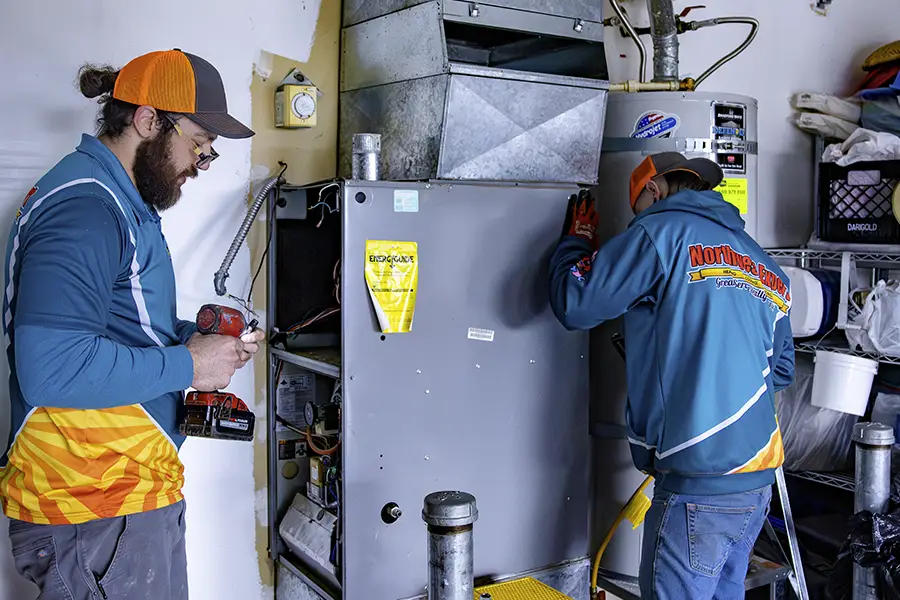
The first chilly morning of fall in Federal Way sends just about everyone to the thermostat, and many homeowners notice a burning smell the moment the heat kicks on. In most cases, it’s simply dust burning off parts that sat idle all summer. Sometimes, though, that odor points to overheating or an electrical problem that shouldn’t be ignored. If the smell sticks around, scheduling professional furnace repair is the safest next step. Below, we’ll walk through what causes the smell, when it becomes a concern, and how to keep your heating system running safely all season long.
What Causes a Burning Smell When You First Turn On the Heat?
When your furnace fires up after months of rest, that burning smell can catch you off guard. Working in homes across Federal Way, we find the most common cause is dust and debris that have settled on the heat exchanger, burners, or heating elements during the off-season. Once the system heats up, the buildup burns away, creating the familiar odor.
Our damp Puget Sound climate plays a part, too. Between the long stretch of mild summer weather and the moisture hanging in the air, homes near Twin Lakes and out toward Dash Point often have systems that sit idle for months, giving dust plenty of time to accumulate.
Here are the usual sources we trace that first-of-the-season smell back to:
- Off-season dust: A thin layer of dust on internal components burns off within the first few heating cycles.
- Recent service or new parts: Components that were just repaired or replaced may emit a slight odor as they settle into normal operation.
- Worn or aging parts: Older systems may emit odors from motors, belts, or other parts nearing the end of their lifespan.
- Electrical issues: Overheating wires or failing electrical components can create a sharper, more concerning odor.
A light dusty smell that fades within an hour is usually harmless. If the odor lingers, grows stronger, or smells different than usual, that’s your signal to have a professional take a look. Routine inspections help catch small problems before they turn into bigger ones.
At Northwest Expert Heating, Cooling & Electrical, we’re here to help keep Federal Way homes safe and comfortable.
Is a Burning Smell From Your Heater Dangerous?
It can be. A faint odor during the first few minutes of operation is common, but a persistent burning smell can point to something more serious.
Based on what we see in Federal Way properties, the type of smell tells us a lot:
- Dusty or musty smell: Usually, the dust burns off and typically clears up quickly.
- Burning plastic or rubber: Often linked to overheating wiring, a failing blower motor, or an object that fell into a vent.
- Electrical or metallic smell: Can indicate an overheating component or wiring problem that carries a fire risk.
These warning signs deserve quick attention. A malfunctioning heater can go from inconvenient to dangerous faster than most people expect, and your family’s safety comes first.
If you notice smoke, sparking, or unusual noises along with the smell, shut the system off and call a professional. Smells that seem to come from outlets, switches, or your electrical panel rather than the furnace itself may require professional electrical repair to identify the source.
Our team is fully licensed, bonded, and insured, and we take every burning-smell call seriously. Regular inspections are one of the best ways to prevent these issues from developing in the first place.
Let’s stay alert and make safety the priority this heating season.
How to Address a Burning Smell in Your Heating System
A burning smell that doesn’t go away needs prompt attention. The good news is that you don’t have to figure it out alone. Here’s how we recommend handling it:
- Turn off the heat: Shutting the system down at the thermostat keeps a possible overheating problem from getting worse.
- Take note of the details: Pay attention to what the smell is like, where it seems strongest, and whether it started right away or after the system had been running for a while. These details help a technician pinpoint the cause faster.
- Check the air filter: A clogged filter restricts airflow and can cause the system to overheat. If it looks dirty, swapping in a fresh one is a simple step, but a dirty filter alone doesn’t rule out other problems.
- Keep vents and registers clear: Make sure furniture, rugs, and stored items aren’t blocking airflow around your supply and return vents.
- Leave the internal inspection to a professional: Wiring, burners, motors, and electrical components inside the furnace should only be inspected by a trained technician.
In our service calls throughout Federal Way, we often find that the root cause is hidden inside the unit, where homeowners can’t safely reach it. Overheating electrical parts, a struggling blower motor, or a cracked component all need proper testing tools and training to diagnose. Our HVAC repair team can find the source of the smell and fix it correctly the first time.
When to Call a Professional About Heating Issues?
Some heating problems clearly call for an expert. If a burning smell lingers or is accompanied by unusual noises when your system starts up, it’s time to reach out. Waiting it out can lead to bigger and more expensive problems later.
Call a licensed technician if you notice any of the following:
- Persistent odors: A burning smell that lasts longer than the first hour of operation or returns every time the heat runs.
- Weak heating: Your home isn’t warming up the way it used to, even with the thermostat turned up.
- Temperature swings: Rooms feel noticeably warmer or cooler than others, or temperatures fluctuate throughout the day.
- Thermostat trouble: The system doesn’t respond properly when you change settings.
- Overdue service: Your heating system hasn’t been inspected in over a year.
Age matters too. We see plenty of older furnaces in neighborhoods along Pacific Highway South that have been running for decades. When an aging system keeps producing odors or needing repairs, heating replacement can end up being the more reliable and cost-effective choice. If upgrading makes sense for your home, we offer financing options through Service Finance Company.
At Northwest Expert Heating, Cooling & Electrical, we’re committed to making sure no customer is left without heat. Calling a professional early can save you time, money, and a lot of worry.
Preventing Future Burning Smells in Your HVAC System
A burning smell every fall isn’t something you just have to live with. With a little planning, you can keep your system cleaner and running more safely year after year.
Here are four steps we recommend:
- Schedule annual maintenance: Have a certified technician clean and inspect your system before the heating season starts, ideally in early fall before the first cold snap.
- Change filters regularly: Replace air filters every 1 to 3 months to maintain airflow and reduce dust buildup inside the system.
- Keep outdoor units clear: If you have a heat pump, keep leaves, branches, and debris away from the outdoor unit to prevent blockages and overheating.
- Listen for unusual sounds: grinding, squealing, or rattling can indicate developing problems, so let a professional know as soon as you hear them.
Staying ahead of maintenance means a warm, safe home without that unsettling smell greeting you every October.

Trust Your Nose, Then Trust the Experts
A burning smell when you first turn on the heat is usually just dust saying goodbye, but it’s never something to shrug off when it lingers. Knowing what the smell means and when to get help keeps your home safe and your furnace running strong through the wet winter in Federal Way. The team at Northwest Expert Heating, Cooling & Electrical services and installs all major brands of furnaces, heat pumps, and ductwork. We stand behind every job with a satisfaction guarantee. If something doesn’t smell right, book an HVAC inspection and let us take care of it.