
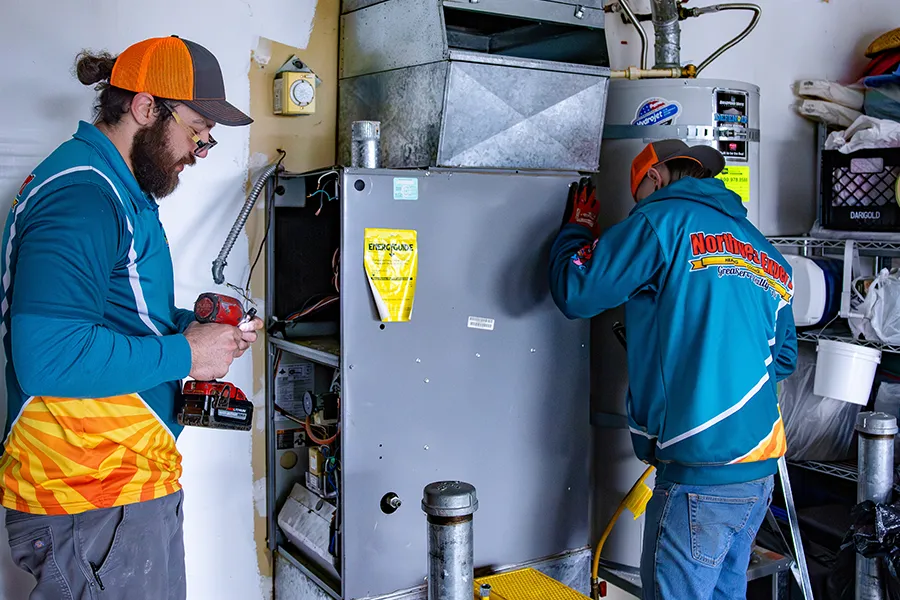
When a furnace keeps turning on and off every few minutes, homeowners in Federal Way usually notice it in their comfort before anything else. In our service calls throughout Federal Way, short cycling most often comes down to a few familiar issues. An oversized furnace can heat the home too quickly, a dirty air filter can restrict airflow and trigger early shutoffs, and a malfunctioning thermostat can misread the temperature. Left alone, any of these can raise your energy bills and put extra wear on your system. If your furnace won’t settle into a steady rhythm, a professional furnace repair service provider can pinpoint the cause. Let’s take a closer look at how each of these factors affects your furnace’s performance.
What Furnace Short Cycling Really Means
Furnace short cycling happens when your furnace turns on and off rapidly without completing a full heating cycle. Instead of running long enough to warm your home evenly, it shuts down early and then fires back up shortly after.
The effects add up quickly:
- Uneven comfort: Rooms swing between warm and chilly rather than maintaining a steady temperature.
- Higher energy bills: Starting up is the most energy-intensive part of a heating cycle, so frequent starts waste energy.
- Extra wear and tear: Constant on-and-off cycling strains the igniter, blower motor, and other components, which can shorten your furnace’s lifespan.
Most of us have felt those annoying temperature swings at some point, but short cycling is more than an inconvenience. It’s usually a symptom of an underlying problem. Heating systems are designed to run in steady, efficient cycles, so when yours keeps stopping and starting, something is off.
Working in homes across Federal Way, we see this problem pick up once the wet, chilly weather settles in and furnaces start running every day. Addressing it early helps prevent larger, more expensive repairs down the line, and regular professional maintenance goes a long way toward keeping your furnace running as it should.
Common Causes of Short Cycling in Federal Way Homes
Short cycling is almost always a sign that something needs attention. Based on what we see in Federal Way properties, from older homes near Steel Lake to newer builds in the West Campus area, these are the most common culprits:
- Oversized furnace: A furnace that’s too large for the home heats the space too quickly, reaches the thermostat setting, and shuts off before completing a full cycle.
- Dirty air filters: A clogged filter restricts airflow, causing the system to overheat and shut itself off as a safety measure.
- Faulty wiring or connections: Loose or damaged electrical connections can disrupt the signals between components and lead to inconsistent operation.
- Flame sensor problems: A dirty or failing flame sensor may not detect the burner flame correctly, causing the furnace to shut down shortly after it lights.
An oversized system is one of the trickier causes because it traces back to the original equipment choice rather than a part that can simply be repaired. When a furnace isn’t matched to the home, a properly sized furnace installation based on a load calculation is often the long-term fix. We service and install all major furnace brands and offer financing through Service Finance Company for homeowners who need a new system.
Addressing these issues promptly helps your furnace run more efficiently and reliably. If you notice short cycling, reach out to Northwest Expert Heating, Cooling & Electrical for a thorough inspection and expert service.
How Do Thermostat Issues Lead to Short Cycling?
Your thermostat tells your furnace when to start and when to stop, so when it’s not working correctly, short cycling often follows.
If the thermostat is sensing the temperature inaccurately, it may shut off the furnace too soon because it thinks your home is already warm enough. That interrupts the heating cycle and keeps the system from ever reaching its best efficiency.
Placement matters too. Here are a few common thermostat problems we run into:
- Poor location: A thermostat installed near a drafty door, a sunny window, or a heat source such as a lamp or a supply vent can give false readings.
- Aging components: Older thermostats can lose accuracy over time and struggle to regulate the system consistently.
- Wiring issues: Loose or corroded wires behind the thermostat can send inconsistent signals to the furnace.
- Incorrect settings: Some thermostats have cycle rate settings that, if configured incorrectly, cause the system to cycle too often.
Relocating a thermostat or correcting its wiring is work best left to a technician. For many homes, a smart thermostat replacement is a worthwhile upgrade that improves temperature accuracy, helps manage energy use, and reduces the chances of short cycling.
The Role of Dirty Filters in Furnace Performance
A dirty filter is one of the simplest causes of short cycling, and one of the most common. As dust, pet hair, and debris build up, airflow through the system becomes restricted. With less air moving through the heat exchanger, the furnace can overheat and trip its high-limit switch, shutting down before your home reaches the set temperature.
In our experience, staying on top of filter changes makes a real difference in how smoothly a furnace runs. Clean filters help your system:
- Maintain proper airflow: Air moves freely through the system, allowing it to heat your home evenly.
- Run more efficiently: Your furnace doesn’t have to work as hard, which helps keep energy costs in check.
- Last longer: Less strain on components means less wear and fewer costly repairs over time.
Federal Way homes tend to stay closed up during the rainy months, which means more dust and indoor debris circulating through the system. Checking your filter monthly during the heating season and replacing it every 1 to 3 months is a good habit. Having your system professionally inspected each year also helps catch airflow problems that a new filter alone won’t solve.
Keep in mind that a clogged filter doesn’t just cause short cycling. Over time, it causes wear and tear that can shorten your furnace’s lifespan and increase the likelihood of expensive repairs.
When to Call a Professional for Short Cycling Problems?
If your furnace is short-cycling frequently, it’s best to act quickly rather than wait for the problem to worsen. Short cycling can point to anything from a thermostat issue to a more serious mechanical or electrical failure.
If you’ve already confirmed the air filter is clean and the problem continues, it’s time to bring in a professional.
Call a qualified technician if you notice:
- Frequent cycling: The furnace turns on and off several times in an hour.
- Unusual noises: Clicking, banging, or squealing when the system starts or stops.
- Poor heating: Your home isn’t warming up as it should, even with the furnace running frequently.
- Rising energy bills: Costs climb without any change in how you use your system.
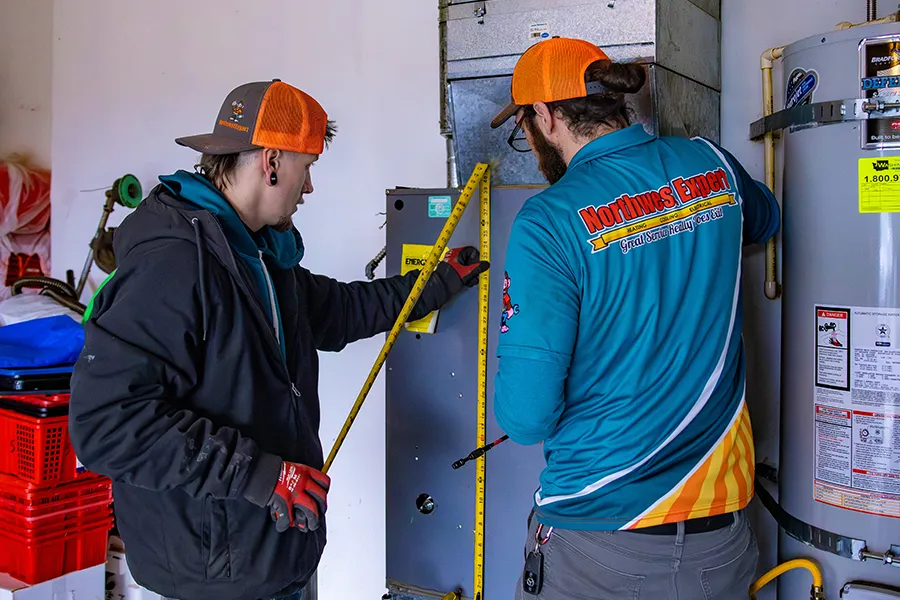
Ignoring these signs can lead to higher energy bills and potential damage to the furnace. An expert diagnosis identifies the exact cause and ensures it is fixed correctly. Our HVAC repair team has the tools and training to test flame sensors, limit switches, wiring, and controls, so the real problem gets solved.
At Northwest Expert Heating, Cooling & Electrical, our certified team is ready to help. We’re fully licensed, bonded, and insured, and we’re committed to keeping your home warm and comfortable all winter long.
An Expert Fix for a Furnace That Won’t Settle Down
A furnace that keeps starting and stopping is trying to tell you something. Whether it’s a clogged filter, a thermostat that’s lost its accuracy, or a system that was never the right size for your home, understanding the cause is the first step toward steady, reliable heat. From Steel Lake to West Campus, the team at Northwest Expert Heating, Cooling & Electrical is here to help Federal Way homeowners get their furnaces back in rhythm, and we back every job with a satisfaction guarantee. If your furnace is cycling more than it should, schedule your furnace service today, and we’ll get it running smoothly agai